
Schroth Scoliosis Management
Idiopathic scoliosis signifies that it is of unknown cause or unrelated to any disease. It accounts for 80-90% of all cases. It appears before the attainment of skeletal maturity (age 9-18).
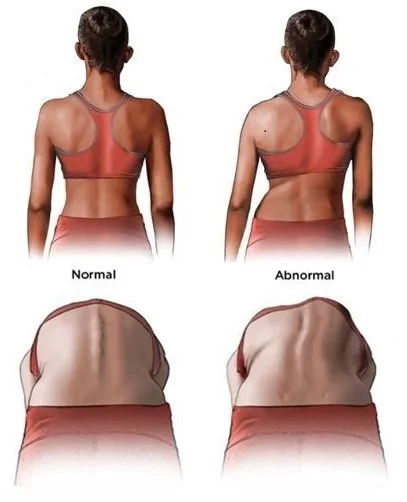
It can be observed as an asymmetrical silhouette of the trunk when standing. On forward bending, the structural components can be seen more clearly. This is due to the rib hump and/or lumbar bulge that appear in this position.
The diagnosis of scoliosis is verified by an x-ray of the entire spine in a standing position. With this information, the Schroth therapist can classify the individual's curve pattern and assess the risk of progression. An appropriate treatment plan is then implemented that may or may not include bracing.
Goals of treatment:
Improve spinal mobility, stability and function
Promote frontal and sagittal plane corrections
Improve postural alignment
Enhance neuromuscular control
Decrease curve progression
Reduce pain
Identify risk of progression and facilitate referral for bracing (if needed)
Who should participate:
Any child or adolescent with idiopathic scoliosis
(early intervention is key in preventing curve progression)Any adult with scoliosis-related pain and dysfunction